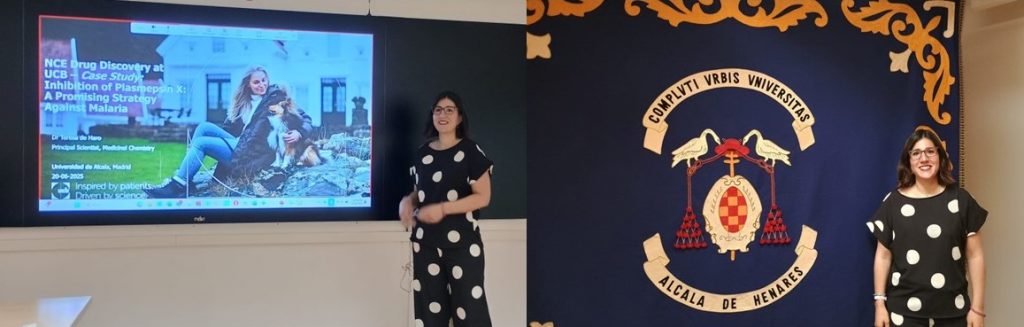
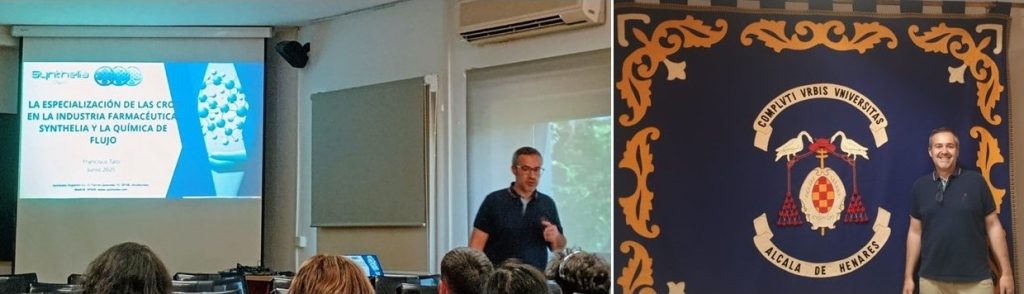
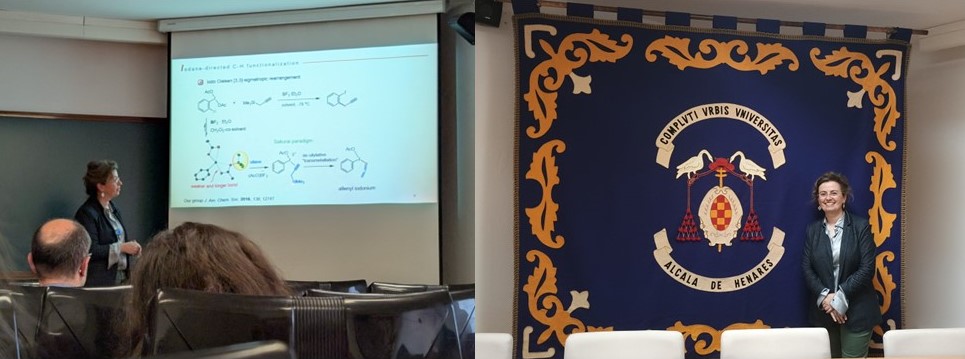
Dr. María Zarzuelo Alba talk
Ramon y Cajal Research Fellow, (CiQUS).
R&D Project Manager Leader, FAMAR
Friday, May 8th, 12:15 h, Sala de Grados, School of Pharmacy

Ramon y Cajal Research Fellow, (CiQUS).
R&D Project Manager Leader, FAMAR
Friday, May 8th, 12:15 h, Sala de Grados, School of Pharmacy

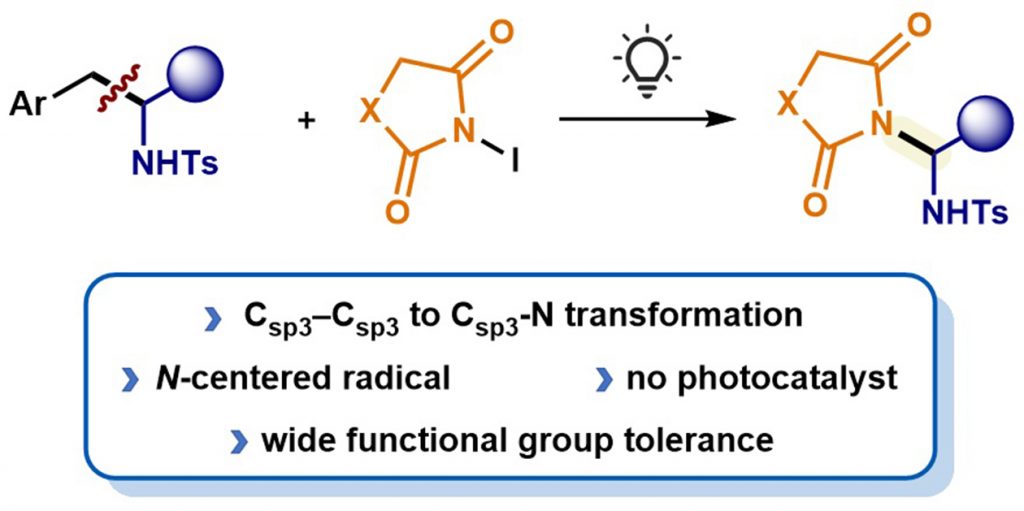
Visible-Light Mediated Functionalization in Phe-Containing Peptides Upon a Debenzylative Amination Process.
Resumen
No hay resumen
Publications > Torres-Oya et al
Enantioselective copper(II) catalysed (4 %@2B 1) cycloaddition of aza-o-quinone.
Universidad de Alcalá (IRYCIS), Departamento de Química Orgánica y Química.
Abstract
Optically active indolines are valuable structural motifs present in numerous naturally occurring and biologically active molecules. Although several methodologies have been reported in the literature for the synthesis of chiral indolines, many of them rely on the hydrogenation of indoles using expensive metal catalysts. In this report, a copper(II)-catalysed enantioselective (4 %@2B 1)
Jaime Mateos-Gil, Marcos Humanes, Manuel A. Fernández-Rodríguez,* Patricia García-García*
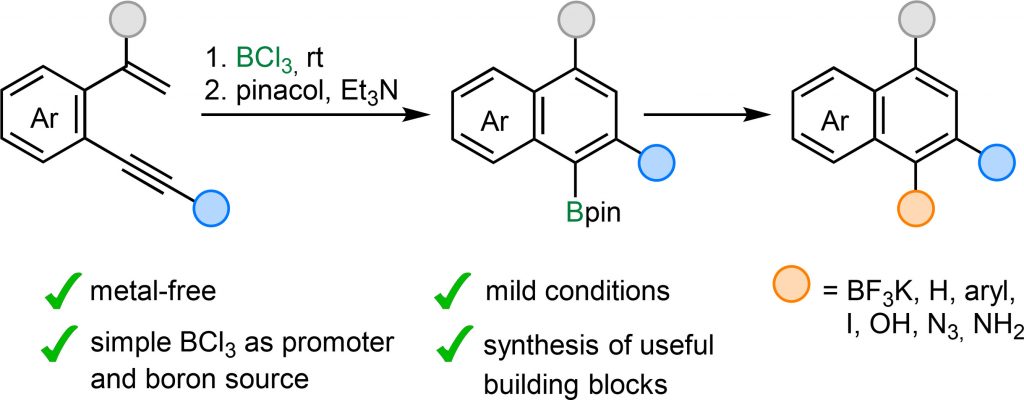
Metal-free borylative cyclizations of alkynes have emerged as a powerful and versatile strategy for the construction of boron-containing cyclic frameworks. By exploiting the electrophilic activation of alkynes with boron Lewis acids, these transformations enable intramolecular nucleophilic attack rendering the simultaneous formation of C–B and C–C or C–X bonds under mild, transition-metal-free conditions. While early examples relied on B(C6F5)3 and delivered products of limited synthetic utility, recent developments based primarily on ClBcat and BCl3 have greatly expanded the scope and practical relevance of these reactions. A wide range of heteroatom- and carbon-based nucleophiles can be engaged, providing access to diverse borylated hetero- and carbocycles, typically isolated as versatile boronate esters. This review summarizes recent advances in this rapidly developing field and reveals future opportunities for expanding molecular diversity through rational substrate design
Chem. Rec. 2026
DOI: https://doi.org/10.1002/tcr.202500356
Catherine Olguin, Christian Tabacaru, Lennart Besse, Martin Simon, Christopher Golz, Marcos Humanes, Manuel A. Fernández-Rodríguez, Patricia García-García,* Maike Mücke, Ricardo A. Mata* and Manuel Alcarazos*
Two different families of BN-doped [5]helicenes have been efficiently synthesized through a highly enantioselective, intramolecular, Au-catalyzed alkyne hydroarylation reaction. Key for the success of the method is the use of BINOL-derived cationic phosphonites as ancillary ligands (BINOL: 1,1-bi-2-naphthol). The inversion barriers of the structures obtained have been determined both experimentally and theoretically, and are essentially identical to those reported for non-dopped carbo[5]helicenes of otherwise identical structure. Contrarily, the newly prepared BN-doped helicenes exhibit intensified absorption spectra at long wavelength (λ ≈ 400 nm) and fluorescence when compared with their only-carbon counterparts. These effects are particularly pronounced for the naphtho[2,1-c]phenanthro[1,2-e][1,2]azaborinine series, in which the BN-unit is located at the rim of the helix. Preliminary studies on the post-synthetic functionalization of these structures are also described; specifically, the naphtho[2,1-c]phenanthro[1,2-e][1,2]azaborinine structure can be site-selective brominated at position 4. In addition, the unprecedented deborilation of these helices to afford axially chiral anilines has been observed by treatment with DDQ.
Chem. Sci. 2026
DOI: https://doi.org/10.1039/D6SC02344D

Tenured Scientist at the ISQCH-University of Zaragoza (CSIC)
Head of the Herrera Organocatálisis Group
Friday, April 25th, 12:15 h, Sala de Grados, School of Pharmacy

Ramon y Cajal Research Fellow, (CiQUS).
Head of the Nappi Reseach Group
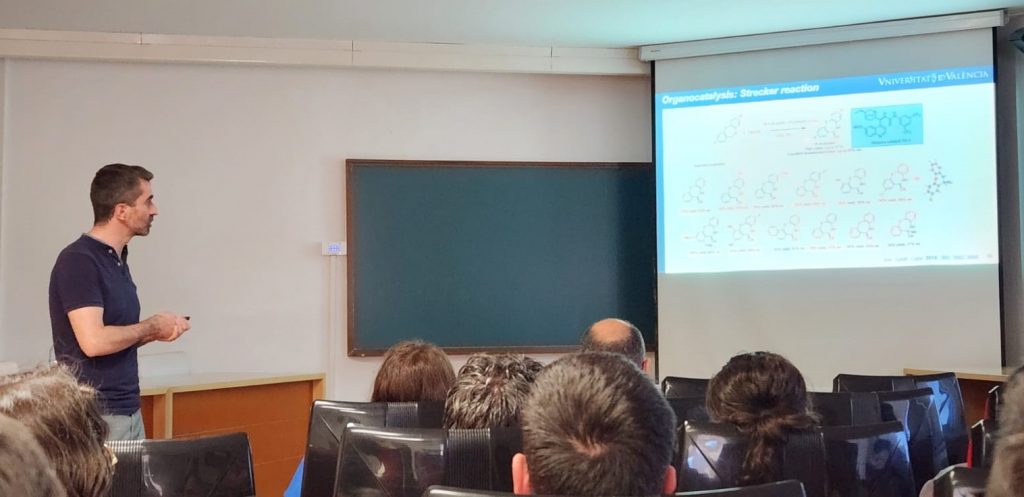
New photochemical activation modes for organic feedstocks and waste gases
Friday, April 17th, 12:15 h, Sala de Grados, School of Pharmacy

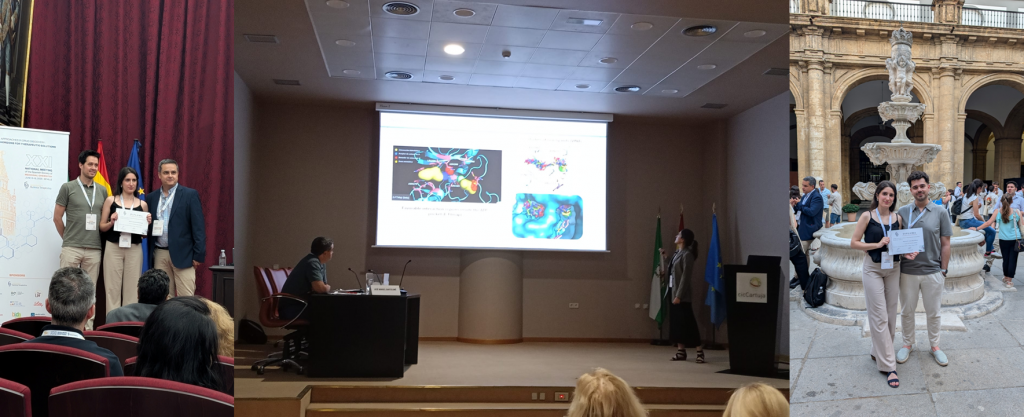
We are delighted to share some wonderful news for our research team! Lorena Parra, Marina Nieto, and Ilargi Goieaskoetxea have recently been awarded the FPI-UAH predoctoral fellowships from the University of Alcalá.
These grants will support them to officially embark on their PhD journeys, conducting their doctoral studies and specialized research right here within the research group.
The addition of these three talented researchers strengthens our commitment to scientific excellence and the development of the next generation of scientists. We are excited to see the fresh perspectives and dedication they will bring to our ongoing projects.
Congratulations to Lorena, Marina, and Ilargi! We look forward to achieving great things together.
Guillermo Morales-Ortega, Iván Pérez-Cubero, Enrique Gómez-Bengoa, Arkaitz Correa,* Javier Carreras*
An efficient protocol for the modification of phenylalanine-containing peptides is developed. The tandem debenzylation–amination process in N-terminal phenylalanine short peptides with N-iodoimides proceeds under visible-light irradiation and metal-free conditions. This method broadens the available chemical toolbox for the modification of Phe and allows the incorporation of N-containing heterocycles into peptide settings.
Adv. Synth. Catal. 2026
DOI: https://doi.org/10.1002/adsc.70352

Aliphatic azo compounds as programmable nitrogen donors in alkyne-mediated.
Universidad de Alcalá, Departamento de Química Orgánica y Química Inorgánica.
Keywords: Aliphatic azo compounds; Azo-alkyne cycloadditions; Heterocycle synthesis; Nitrogen donors; Nitrogen transfer; Pyrazoles; Pyrroles
Abstract
Nitrogen-containing heterocycles constitute the core of many approved drugs and